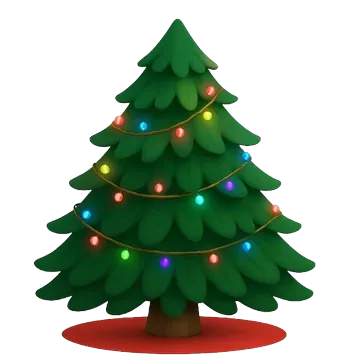

Decorate in this order
Fluff the branches
Spread every branch of an artificial tree out and slightly up. It takes time, and it makes the biggest difference.
Lights first
Start at the trunk and work out along each big branch, from the bottom up. A common rule of thumb is about 100 small lights for every 30 cm (1 ft) of tree for a full look.
Garland or ribbon
Drape it loosely in swoops, or tuck ribbon in vertical cascades from top to bottom.
Big ornaments, then small ones
Place the largest pieces first, spaced out and a little deep in the tree, then fill gaps with smaller ones near the tips.
The topper last
A star, an angel, a bow or nothing at all. Make sure it’s secure before you step back.
10 themes and colour schemes
Classic red and gold
Red baubles, gold ribbon and warm white lights. Hard to get wrong, and it looks like the Christmas cards you grew up with.
Silver and white winter
Clear glass, silver, white feathers and cool white lights for a snowy look.
Scandinavian natural
Wooden ornaments, paper stars, dried orange slices and simple white lights. Less is more.
Retro multicolour
Big coloured bulbs, tinsel and every colour at once. Joyful and nostalgic.
Candy cane
Red and white stripes, peppermint ornaments and a red ribbon. Great with kids.
Blush and rose gold
Soft pink, champagne and rose gold, with warm lights. Modern and calm.
Black and gold
Matte black ornaments with gold accents. Dramatic in a dark room.
Plaid and cabin
Tartan ribbon, pine cones, felt animals and a buffalo-check tree skirt.
The memory tree
Ornaments collected on trips, handmade ones from childhood and small photo frames. Every branch has a story.
One colour only
Pick a single colour in different shades and textures: all green, all blue, all gold. Simple and striking.
Choosing a real tree
If you buy a real tree, the type and the freshness decide how long it looks good.
- Nordmann fir: soft, dark needles that stay on well. A favourite in Europe.
- Fraser fir: firm branches that hold heavy ornaments, and a lovely smell. Popular in the US.
- Norway spruce: the traditional, cheaper choice, but it drops needles sooner, so buy it closer to Christmas.
- Blue spruce: a striking silver-blue colour, with sharp needles. Not ideal with small children.
Do the needle test
Bend a needle between your fingers. On a fresh tree it bends; on a dry one it snaps.
Tap the trunk on the ground
A few needles falling is normal. A shower of green needles means the tree is old.
Cut the base at home
Saw a thin slice, about 2 cm, off the bottom of the trunk so it can drink, and put it in water within a few hours.
Keep the stand full
A fresh tree can drink more than a litre of water a day in the first week. Check it every morning.
Ornaments that cost almost nothing
- Dried orange slices: slice thinly and dry in a low oven for a few hours, turning them now and then. They glow when the lights shine through.
- Paper snowflakes and stars: fold, cut and hang with thread. A good job for an evening with friends.
- Salt dough ornaments: two cups of flour, one cup of salt and about three quarters of a cup of water (any cup works, as long as it is the same one). Cut into shapes, bake slowly until hard and paint them the next day.
- Cinnamon sticks and pine cones: tied with ribbon, they look and smell like Christmas.
Short on space?
- A tabletop tree on a side table or a windowsill.
- A wall tree made of washi tape, lights or branches, hung with a few ornaments.
- A ladder tree: an old step ladder with garland and lights on each step.
- A branch in a vase with a few small ornaments, for a desk or a dorm room.
Keep it safe
- Water a real tree every day; a dry tree catches fire easily.
- Keep the tree away from heaters, fireplaces and candles.
- Use lights that are made for indoor use, and switch them off at night or when you go out.
- Put fragile and small ornaments high up if there are small children or pets.
When to take it down
In the UK and much of Europe, tradition says decorations come down by Twelfth Night, on January 5 or 6, and some people believe leaving them up longer brings bad luck. In some Catholic homes the nativity scene stays until Candlemas on February 2. A real tree usually decides for you: once the needles start falling, it is time.
A tree your friends decorate
This year you can have a second tree that decorates itself. On Deco My Tree you pick a Christmas tree and a topper, share the link, and every friend who leaves you a message hangs a gift on it. By December you have a tree full of ornaments from the people you love, and the messages open on Christmas Day.
Questions
What goes on a Christmas tree first?
Lights first, then garland or ribbon, then the big ornaments, then the small ones, and the topper last.
How many lights do you need for a Christmas tree?
A common rule of thumb is about 100 small lights for every 30 cm (1 ft) of tree height, more if you like it very bright.
When should you put up a Christmas tree?
There’s no rule. Many people decorate at the start of December or on the first Sunday of Advent; in the US many wait until after Thanksgiving.